Professional 5-Function Low Nursing Bed with Four Independent Side Rails
Product Overview
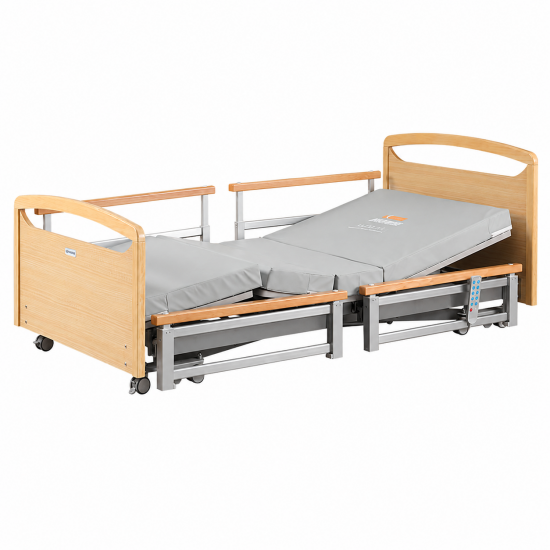
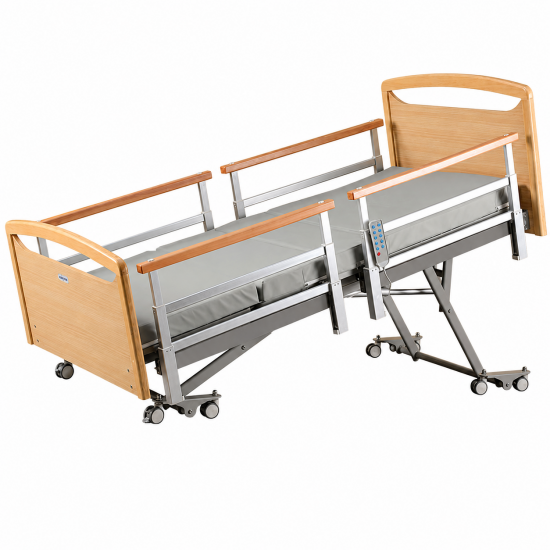
Professional Low Nursing Bed for Long-Term Care Facilities
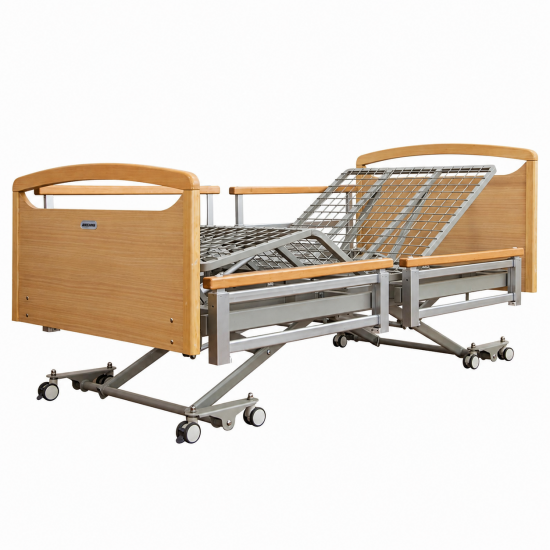
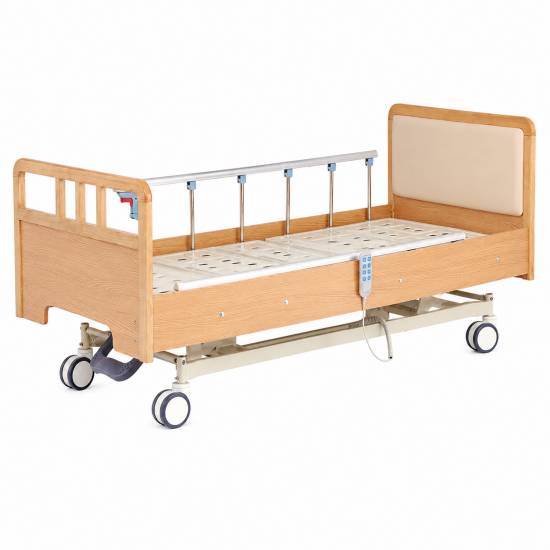
This electric 5-function nursing bed is designed for professional care environments that require a wide height adjustment range, flexible resident positioning and extensive bedside protection. The mattress platform can be lowered to approximately 23 cm and raised to approximately 70 cm, allowing the same bed to serve both low-level resident positioning and elevated caregiver access.
A major difference from conventional low nursing beds is the four-section side protection system. Two independently operated rails are positioned on each side of the mattress platform, giving caregivers greater flexibility when balancing resident protection with direct bedside access.
Combined with five electric adjustments and coordinated wood-finish components, the bed provides a higher-specification solution for nursing homes, rehabilitation facilities and professional long-term care projects.
23–70cm Hi-Low Range Serves Two Different Care Requirements
23cm Low Position for Resident-Centered Care
At its minimum setting, the mattress platform can descend to approximately 23 cm from floor level. This provides a significantly lower resting position than many conventional care beds and gives facilities greater flexibility when configuring the bedside environment for elderly residents.
Low Height as Part of Bedside Safety Planning
For residents with reduced mobility or an identified risk of falling from bed, reducing mattress height can be considered alongside supervision, side protection and other facility safety measures. The low position does not replace an appropriate care plan, but it gives caregivers another way to configure the bed according to individual requirements.
70cm Elevated Position for Professional Care
A low bed must also work for the people providing care. The mattress platform can therefore be raised electrically to approximately 70 cm, providing a substantially higher working position for caregivers.
Before bedding changes, personal care, resident repositioning or other bedside procedures, staff can raise the complete platform to a more practical level and lower it again afterward.
Approximately 47cm of Usable Height Travel
The difference between the minimum and maximum positions is approximately 47 cm. For professional procurement, this complete adjustment range is more meaningful than considering minimum bed height alone.
Four Independent Side Rails Create a More Flexible Protection System
Four Protective Sections Instead of Two Conventional Rails
This model uses four separate side rail sections, with two positioned on each side of the mattress platform. The arrangement provides extended protective coverage around the resident while avoiding the limitations of a single rigid full-length rail.
Independent Operation Is the Key Difference
Each side rail section can be operated independently. Caregivers can therefore lower the section required for a particular nursing procedure while leaving other sections in their raised position.
This is particularly useful when only localized access is required. Instead of opening an entire side of the bed, staff can adjust the protective configuration according to the task being performed.
Extended Coverage Along the Mattress Platform
The four-section layout distributes protection across both the upper and lower portions of the bed. For long-term care facilities, this provides a different protection concept from beds equipped only with short upper-body side rails.
Protection and Caregiver Access Are Both Important
When evaluating a professional Nursing Bed, buyers should not assess side rails only by their height or material. Rail coverage, independent operation and caregiver access are equally important considerations.
Five Electric Functions for Professional Positioning
Electric Backrest Adjustment
The back section can be raised electrically to support different upper-body positions. Residents can be positioned more upright for meals, reading, communication and other daily activities without requiring manual crank adjustment.
Electric Knee-Rest Adjustment
The knee section can be elevated electrically to change the lower-body position. It can be adjusted independently or combined with the backrest according to individual resident and care requirements.
Electric Whole-Bed Height Adjustment
The complete mattress platform moves between approximately 23 cm and 70 cm, allowing facilities to select different heights for resting, resident assistance and caregiver procedures.
Trendelenburg Positioning
The mattress platform can be electrically tilted into a Trendelenburg position, providing an additional whole-bed positioning option for professional care environments.
Reverse Trendelenburg Positioning
The complete platform can also tilt in the opposite direction to provide reverse Trendelenburg positioning. Together, these movements form the five-function electric configuration.
Side Rail Design That Works with an Articulated Bed Platform
Segmented Rails for Different Bed Sections
An adjustable mattress platform changes shape as the backrest and knee sections move. The segmented side rail design divides the protective system into separate areas rather than surrounding the bed with one continuous rigid structure.
This allows the rail configuration to work more naturally with the articulated design of the electric bed.
Open Only the Area Required for Care
During resident assistance, personal care or transfer preparation, the caregiver can lower the relevant rail section while maintaining protection around other areas of the mattress platform.
This localized access is one of the main practical advantages of the four independently operated side rails.
Wood-Finish Components Create a Higher-End Care Environment
The appearance of the bed is another important distinction. Large wood-finish head and foot panels are coordinated with matching wood-style elements along the tops of the four side rails.
Less Clinical Than a Conventional Hospital Bed
Although the bed provides professional electric functions, its exterior is designed to create a warmer visual impression than traditional hospital equipment. This is particularly relevant in nursing homes and long-term care environments where residents may use the same room for extended periods.
Coordinated Furniture-Inspired Appearance
The repeated wood finish across the headboard, footboard and side rails creates a more integrated design and allows the bed to coordinate more naturally with bedside cabinets, wardrobes and other residential-style furniture.
What Makes This Model a Higher-Specification Low Nursing Bed?
Not Simply the Five Electric Functions
Backrest adjustment, knee positioning, hi-low movement and whole-bed tilt are important, but these functions alone do not fully define the specification level of a nursing bed.
For institutional procurement, buyers should also consider the protection system, usable height range, caregiver access and overall design of the bed.
Four Independently Operated Rails
The four-section rail configuration provides broader protective coverage while allowing individual sections to be opened according to the care procedure.
23–70cm Wide Working Range
The bed combines a low resident position with a considerably higher caregiver working position, allowing the same platform to adapt to different stages of daily care.
Residential-Style Exterior
The coordinated wood-finish design gives nursing facilities an alternative to conventional medical-looking equipment without removing the electric functionality required for professional care.
Designed for Institutional Procurement
Nursing Homes
The wide height range and four-section side protection system make this model suitable for facilities caring for elderly residents who require frequent positioning and bedside assistance.
Long-Term Care Facilities
Five electric functions allow the bed to adapt to different resident positions, while independently operated rails provide flexibility during repeated daily nursing procedures.
Rehabilitation Centers
Electric backrest, knee-rest and height adjustment provide multiple configurations for extended rehabilitation and assisted recovery environments.
Senior Care Projects
The residential-style exterior is particularly relevant to projects where professional nursing functionality needs to be integrated into a warmer living environment.
Medical Equipment Distributors
For distributors, the four independent rails and 23–70 cm height range provide clear technical selling points that distinguish this model from conventional electric nursing beds.
How Buyers Should Compare Four-Rail Nursing Beds
Check Whether the Rails Operate Independently
Four visible rail sections do not necessarily provide the same functionality. Buyers should confirm whether each section can be operated separately rather than only counting the total number of rails.
Evaluate Actual Protective Coverage
Consider how much of the mattress side is protected when all rails are raised and whether gaps between sections are appropriate for the intended care environment.
Check Access When Individual Rails Are Lowered
The value of independent rails is closely related to caregiver access. Buyers should consider whether lowering one section creates sufficient access for the nursing activities routinely performed by staff.
Compare the Complete Height Range
For low nursing beds, both minimum and maximum heights matter. A low minimum position serves the resident, while sufficient maximum height supports caregiver workflow.
Consider the Target Care Environment
Clinical wards, nursing homes and residential elderly care facilities may have different requirements for appearance, side protection and positioning functions. Product selection should therefore reflect the actual operating environment rather than specifications alone.
A Premium Configuration for Modern Long-Term Care
This electric Nursing Bed is designed around three priorities: adaptable bed height, comprehensive side protection and professional electric positioning.
The approximately 23 cm low position provides a reduced mattress height for resident-centered care, while the approximately 70 cm maximum position creates a higher working level for caregivers. Four independently operated side rails extend protection along both sides of the bed without requiring all sections to be lowered whenever bedside access is needed.
Combined with five electric functions and a coordinated wood-finish exterior, the model provides a higher-specification option for nursing homes, long-term care institutions, rehabilitation facilities and medical equipment distributors seeking an advanced elderly care bed.
For project procurement, OEM configurations, product specifications or bulk quotation requirements, please contact us.
Frequently Asked Questions
Yes, we support comprehensive OEM and ODM customization services. We can adjust bed size, load-bearing capacity, number of adjustment functions, bed surface material, guardrail style and overall color according to your demands. For medical institutions, we can also add matching auxiliary accessories
We support door-to-door global shipping covering Europe, North America, Southeast Asia, Middle East and other regions. All medical beds are shipped with modular packaging to reduce transportation damage. We provide free detailed English paper installation manuals and step-by-step installation video
Our full range of medical beds supports multi-scenario use. Electric medical beds and manual hospital beds are specially designed for general wards, intensive care units and emergency rooms of public and private hospitals. Nursing beds with side rails and anti-fall functions are perfect for nursing
Related Products You May Like
Electric Nursing Home Care Bed...
Electric Home Care Nursing Bed for Comfortable Daily LivingThis modern home care
Five Function Ultra-Low Hospit...
Ultra-Low Five Function Electric Nursing Bed for Safer Patient CareThis premium
Professional Electric Nursing ...
Professional Electric Nursing Bed for Daily Care and RehabilitationThis professi