Multi-Position Electric Turning Nursing Bed with Wooden Panels and Folding Side Rails
Product Overview
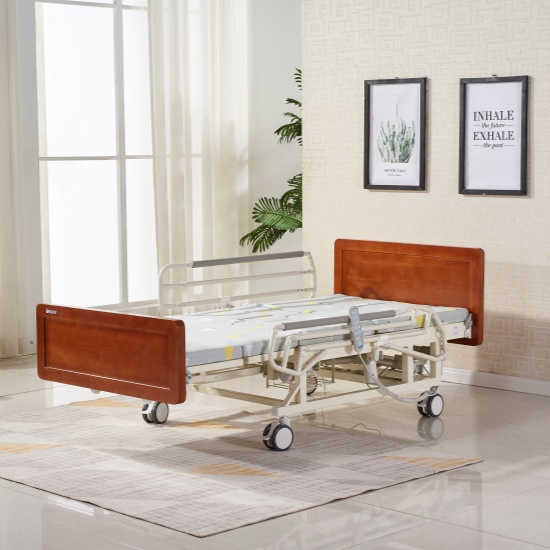
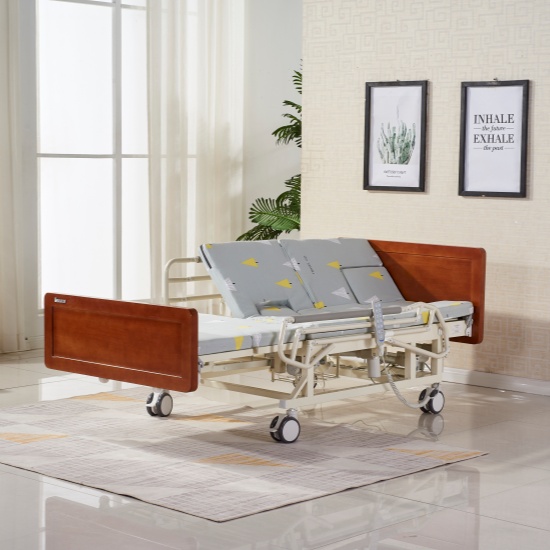
Multi-Position Turning Bed for More Demanding Daily Care
Patients and elderly users who spend extended periods in bed often require more than basic backrest and leg adjustment. Regular repositioning, assisted sitting and convenient bedside access can become part of the everyday care routine. This electric turning nursing bed brings these functions together in one practical platform for long-term care.
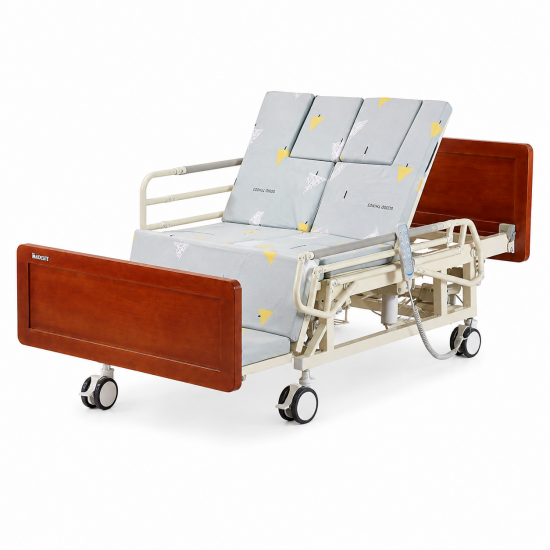
The bed combines electric left and right turning assistance with adjustable back and leg sections. Wooden head and foot panels give the product a warmer, less clinical appearance, while three-section folding side rails allow caregivers to open different areas of the bedside when direct access is required.
Electric Left and Right Turning Assistance
The key feature of this model is its electric lateral turning system. Instead of relying entirely on caregivers to reposition a user manually, the articulated sleeping platform can assist movement toward either side through controlled electric adjustment.
This makes the bed particularly relevant for users with restricted mobility who require frequent position changes during long-term care. For facilities comparing different Turning Nursing Bed configurations, the turning mechanism is an important distinction from conventional adjustable care beds.
Controlled Repositioning from the Bed Surface
The turning sections are integrated into the bed platform so that the supporting surface moves together with the user during lateral positioning. The movement is designed to provide gradual support rather than requiring the caregiver to perform the entire repositioning process manually.
In practical daily care, this can assist with scheduled position changes, bedding adjustment and other bedside routines involving users who cannot easily turn independently.
More Than a Single-Function Turning Bed
Turning assistance is only one part of this model. The bed also provides multiple electric positioning functions for different stages of daily care, allowing it to be used for sleeping, resting, sitting and bedside activities.
Backrest Adjustment for Sitting and Upright Support
The electrically adjustable back section raises the upper body from a flat sleeping position into a more upright posture. This can make meals, drinking, reading, conversation and other daily activities more convenient for users who remain in bed for extended periods.
Adjustable Leg Position
The lower section of the bed can also be repositioned to provide different leg support configurations. Back and leg movements can be used according to individual comfort requirements and the caregiver's positioning routine.
Electric Hand Control
The available movements are operated through a wired handset, giving caregivers convenient access to commonly used adjustments. This reduces dependence on manual cranks and makes repeated position changes easier during everyday care.
Three-Section Folding Side Rails
Instead of using a large one-piece side barrier, this model is equipped with segmented folding side rails. The three-section structure is designed around practical bedside access and allows different portions of the rail system to be lowered when required.
Flexible Access for Different Care Tasks
Caregivers do not always need access to the entire side of the bed. Depending on the task, access may be required around the upper body, central area or lower section. A segmented rail system provides greater flexibility than a continuous full-length rail.
When folded, the rails remain close to the bed frame, helping keep the bedside area accessible. When raised, they provide additional side support for the user during normal bed use.
Wooden Head and Foot Panels Reduce the Institutional Appearance
Although this model provides extensive electric positioning functions, its appearance is intentionally different from a conventional clinical hospital bed. Wooden head and foot panels introduce a warmer furniture-style element to the overall design.
This combination is particularly useful in environments where professional nursing functions are required but purchasers do not want the room to feel excessively medical. Nursing facilities, rehabilitation centers and long-term care institutions can therefore combine practical positioning functions with a more residential visual style.
A Practical Balance Between Medical Function and Living Environment
Long-term users may spend weeks, months or considerably longer using the same bed. For this reason, product selection often involves more than mechanical specifications. The appearance of the equipment and how naturally it fits into the surrounding room can also influence purchasing decisions.
The wooden panels help distinguish this model from conventional ABS medical bed designs without removing the electric functions required for more demanding care situations.
Designed for Users Who Need More Positioning Assistance
A conventional adjustable Nursing Bed may be suitable for users who can still reposition themselves or only require basic back and leg adjustment. This model addresses a different level of care.
Its turning mechanism is intended for users who have greater difficulty changing their lying position independently. Combining turning assistance with normal adjustable bed functions gives caregivers a wider range of positioning options from a single bed.
Useful for Repeated Daily Care Routines
For long-term care, small tasks repeated several times every day can create a significant workload. Changing lying positions, raising the user for meals, adjusting the legs and accessing different parts of the bedside are all routine examples.
The design of this bed focuses on making these repeated tasks more manageable through electric movement and flexible bedside access rather than simply increasing the number of functions on the specification sheet.
Applications in Professional and Long-Term Care
This electric turning nursing bed can be considered for long-term care wards, rehabilitation facilities, nursing institutions, elderly care centers and other environments caring for users with reduced mobility. Its combination of repositioning functions and residential-style wooden panels also makes it suitable for higher-standard care rooms where both functionality and appearance are important.
Options for Distributors and Institutional Projects
Different markets may require changes in electrical systems, accessories, mattress configurations, packaging or other product details. Configuration options can be discussed according to distributor requirements, institutional projects and target-market preferences.
As a manufacturer of patient care equipment, we support OEM and ODM cooperation for overseas distributors and project buyers. Buyers can compare additional models in our Turning Nursing Bed series or contact us for specifications, configuration details and quotation information.
Frequently Asked Questions
Yes, we support comprehensive OEM and ODM customization services. We can adjust bed size, load-bearing capacity, number of adjustment functions, bed surface material, guardrail style and overall color according to your demands. For medical institutions, we can also add matching auxiliary accessories
We support door-to-door global shipping covering Europe, North America, Southeast Asia, Middle East and other regions. All medical beds are shipped with modular packaging to reduce transportation damage. We provide free detailed English paper installation manuals and step-by-step installation video
Our full range of medical beds supports multi-scenario use. Electric medical beds and manual hospital beds are specially designed for general wards, intensive care units and emergency rooms of public and private hospitals. Nursing beds with side rails and anti-fall functions are perfect for nursing
Related Products You May Like
Multi-Position Electric Turnin...
Multi-Position Turning Bed for More Demanding Daily CarePatients and elderly use
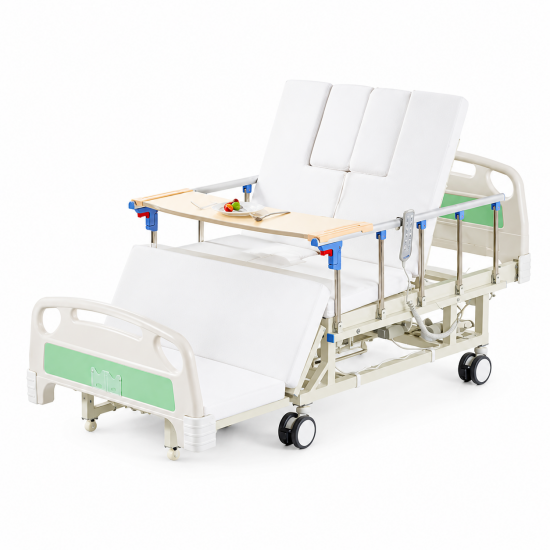
Electric Patient Repositioning...
Electric Patient Repositioning Bed for Long-Term Nursing CarePatients who spend
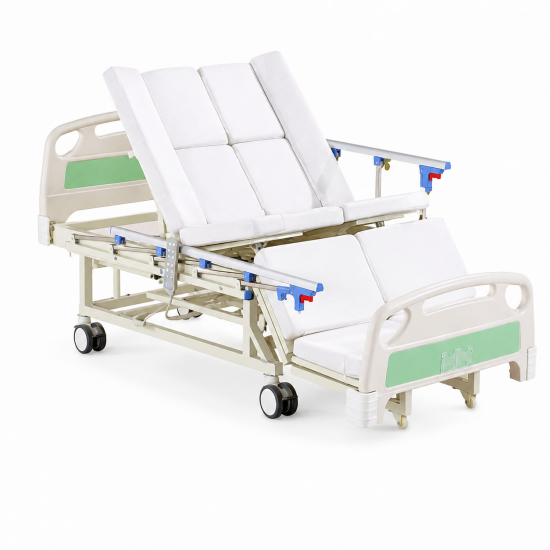
Electric Full-Length Turning C...
Multifunction Turning Care Bed for Patients Requiring Daily Positioning Assistan